Selling a House That Needs Work — Without Fixing It First
A long repair list doesn't make a home unsellable. Here's how to decide between fixing first and selling as-is — with the math on your side.
Alison Walden6 min read
Capital Region Homeowner Guide
The information in this guide is intended for educational purposes and reflects common situations we encounter working with homeowners throughout New York's Capital Region. Every property and every family's situation is unique.
The fastest way to lose money before a sale is to fix the wrong things. Homeowners routinely spend on projects buyers shrug at while skipping the ones that actually unlock value.
Here's how to tell the difference in the Capital Region, where much of the housing stock predates 1940 and condition expectations are set accordingly.
Problems that can complicate a buyer's mortgage or insurance often deserve attention if you're listing: an active roof leak, a heating system that doesn't work, wiring an insurer won't cover, or major water intrusion. Whether a given issue blocks a particular buyer depends on the lender, the loan type, and the inspection.
Cosmetic refreshes with high visual impact and low cost — interior paint in neutral tones, refinished floors, updated light fixtures, fresh landscaping — reliably lift perceived value for a modest spend.
Full kitchen and bathroom gut renovations often do not return their full cost when done purely to sell, though results vary with the house and the market. Buyers discount your finishes and want to choose their own.
High-end upgrades that outrun the neighborhood — luxury appliances on a modest block, elaborate landscaping — price out rather than up. So do invisible big-ticket items like a brand-new HVAC system when the old one still works.
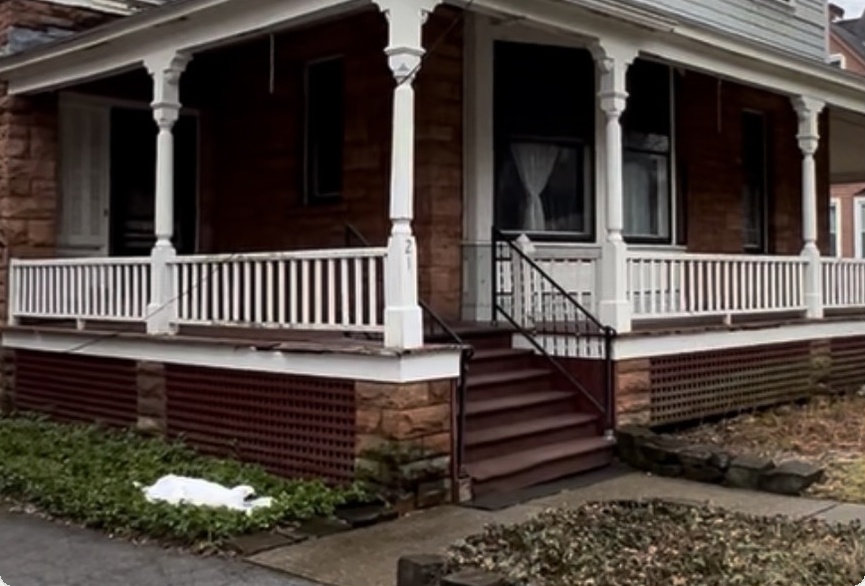
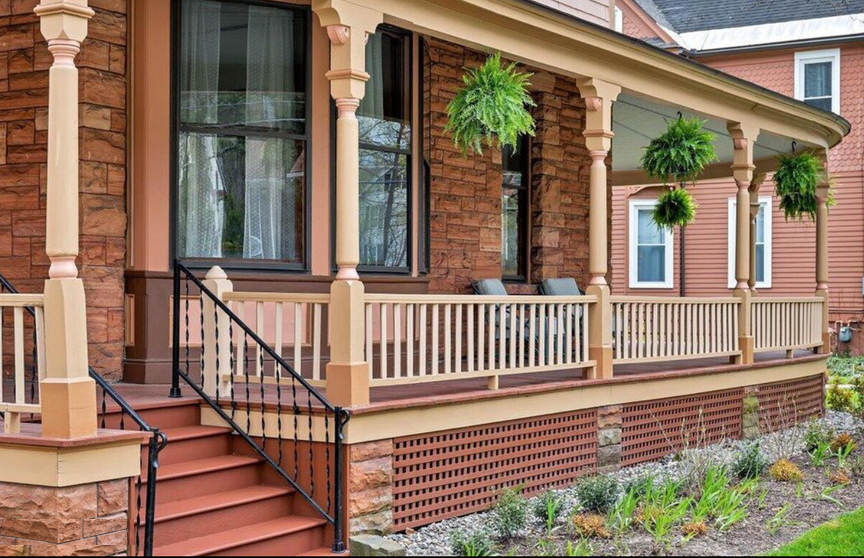
Front porch, targeted repair: the wood had rotted in places, the paint was worn, and the entry looked tired. The rotted wood was repaired, the porch was repainted, and a few hanging ferns were added. Nothing was replaced that did not need replacing. This is low-cost maintenance that changes a buyer's first impression from the street.
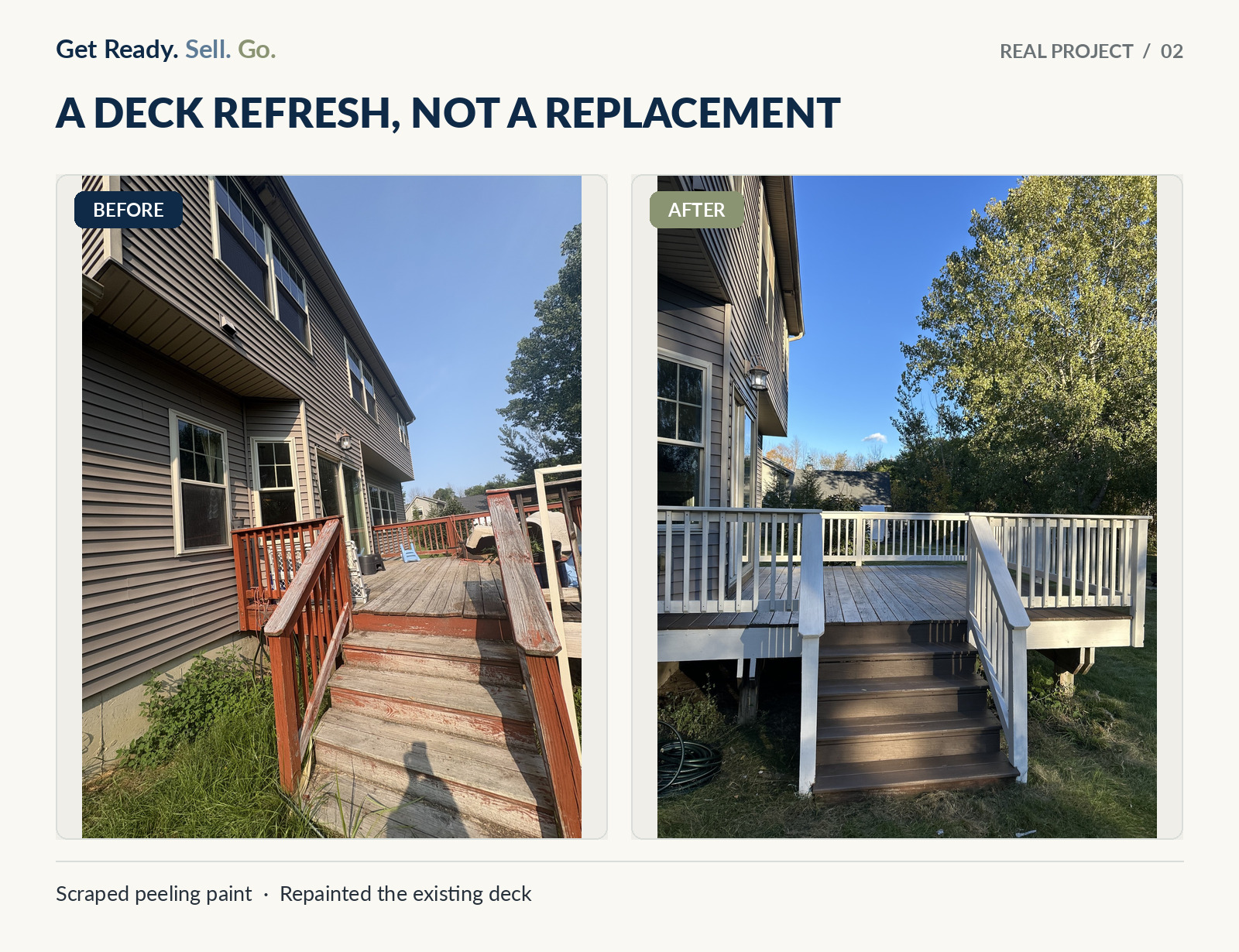
Back deck, refresh instead of replace: the deck had peeling paint but a sound structure. It was scraped and repainted rather than rebuilt. When the bones of something are fine, a refresh is usually the better use of money than a new installation.
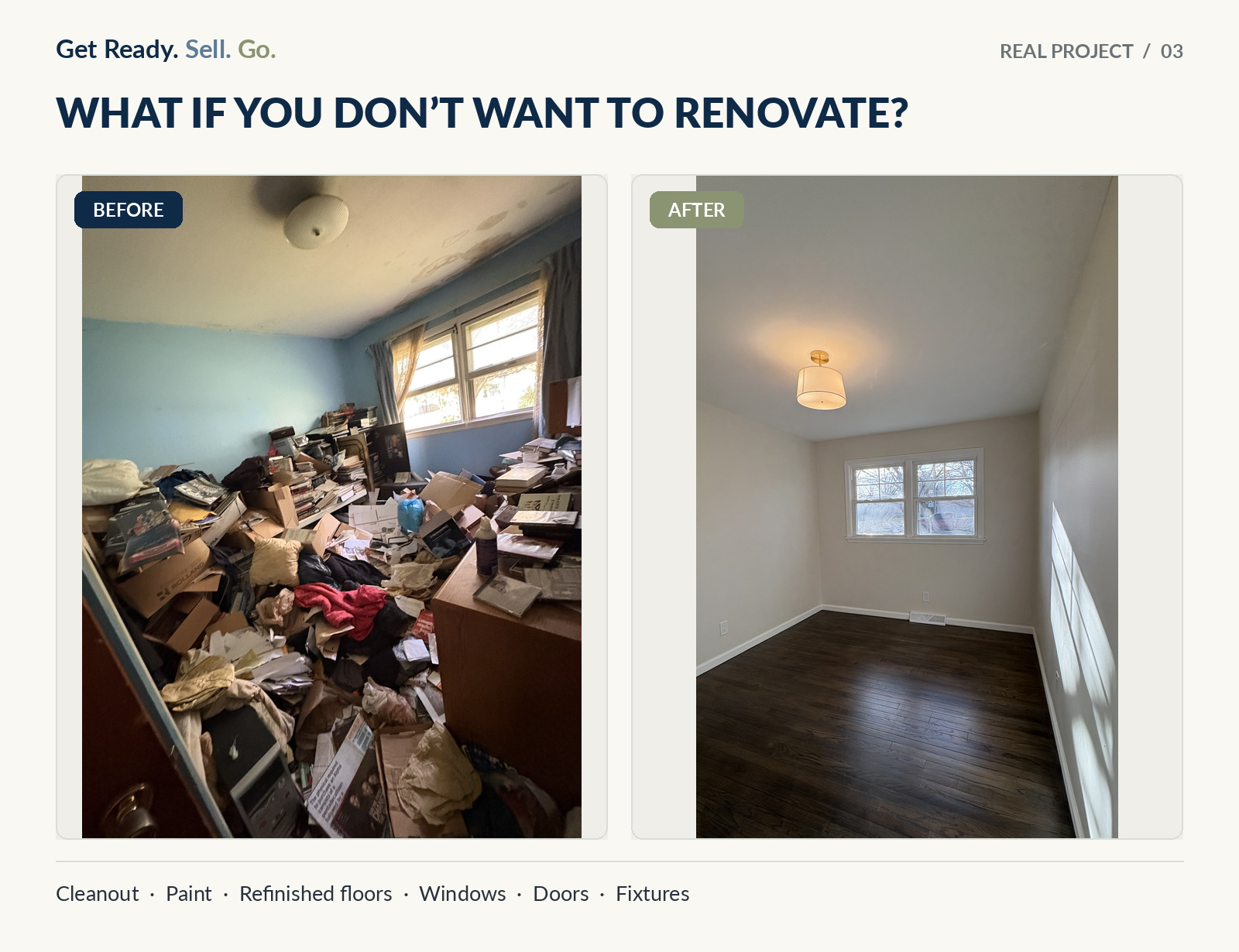
Bedroom, the project many sellers should not take on: this room needed a major cleanout, paint, refinished hardwood floors, new windows, new doors, and new fixtures. The result looks very different, but it took real time, money, and coordination. For a homeowner who is short on time, funds, or energy, selling as-is and leaving that work to the buyer can be the more sensible choice.
These photos show the work itself. They are not a promise of what any particular house will sell for after similar work.
1. Is it a safety, structural, roof, heating, or water problem? Those can stop a financed buyer, so they deserve attention first, either by fixing them or by pricing the home to reflect them.
2. Can it be repaired or refreshed instead of replaced? Repainting a deck or repairing rotted trim is often enough.
3. Will buyers in your neighborhood actually pay for it? Compare with recent sales of similar homes nearby, not with renovation shows.
4. What does waiting cost? Add taxes, insurance, utilities, and the months the work takes, not just the contractor quote.
5. Do you have the time, money, and patience to manage it? If the honest answer is no, an as-is sale may leave you better off overall.
If you want to see how these trade-offs look for your own house, our free selling assessment compares selling as-is, listing as-is, and preparing first, and emails you the estimate.
If the repair list is long, the home needs work you'd rather not manage, or you simply want to be done, an as-is sale hands the whole list to the buyer. You may net less, but you avoid paying for the work upfront and can often close sooner, depending on the buyer and title.
Our Home Selling Plan estimates your home's repairs and compares fixing-then-listing against an as-is sale, so you can weigh the trade-offs. Repair-cost estimates are approximate and depend on the property's condition, location, materials, and labor requirements. Obtain written quotes from local contractors before committing to major work.
Start with current condition, then compare preparation, timing, costs, and estimated net proceeds across the relevant selling paths.
Explore local homeowner resources for communities throughout Albany, Rensselaer, Schenectady, and Saratoga counties.

Alison Walden has 10 years in real estate and has been renovating homes since 2013. She built Get Ready. Sell. Go. to help homeowners compare a direct offer, a current market sale, and preparing first before committing to an agent, investor, or renovation plan. Direct purchases may be completed through an LLC in which Alison has an ownership interest. In some transactions, purchase-contract rights may be assigned to another buyer, and Alison may receive compensation from that assignment. Applicable financial interests and assignment arrangements will be disclosed in writing. Any market representation requires a separate, disclosed licensed brokerage relationship.
Cornerstone resources for readers who want to go deeper on this topic.
A long repair list doesn't make a home unsellable. Here's how to decide between fixing first and selling as-is — with the math on your side.
What June 2026 housing data means for homeowners in Albany, Rensselaer, Schenectady and Saratoga counties — county medians, inventory, and what actually drives an individual home's value.
What to do after inheriting a property in Albany, Rensselaer, Schenectady or Saratoga County — probate, heirs, repairs, taxes and selling options.
Downsizing is one of the few moves you get to plan. Here's how to use that advantage — from equity to timing to choosing the right path.
Before spending thousands of dollars on repairs or renovations, find out what your home may be worth in its current condition and explore your options.
Analyze Your Home-Selling Options